



Since the
dawn of European civilisation, the East has played a central role in shaping
the identity of the West, serving both as a myth and as a mirror of its fears
and utopias. Within this framework, the Eurasian steppe has long been imagined
by essentially sedentary Europeans as a barbaric, anarchic, and negative realm.
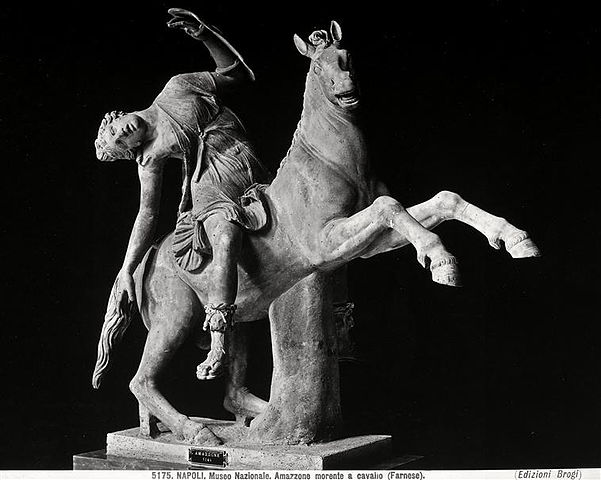
It was seen as the land of the Amazons, whose myth embodied unsettling aspects
of femininity – such as masculine strength and resistance to male authority –
rekindling ancestral fears of matriarchy.
Yet, the
proliferation of translations and intercultural exchanges in (post)modernity
laid the groundwork for moving beyond a reductive Manichean vision of the
East/West relationship. Postcolonial philosophies, in particular, have
challenged this binary, fostering a growing awareness of cultural transfer and
the complex interplay between Western and non-Western histories.
In this
context, the rediscovery and translation of indigenous sources, along with
studies conducted since the 19th century, have opened new perspectives on
steppe civilisations, shaped by the encounter of Eastern and Western
viewpoints. Once cast as harbingers of the Apocalypse, nomadic empires have
been re-evaluated: admired for their capacity to unite diverse cultures, their
meritocratic structures, and their religious tolerance, they are now recognised
as precursors of modernity and key agents of global history.
This
reappraisal extends to steppe women, long confined to distorted representations
that likened them to witches or unsettling warriors, indistinguishable from the
men of their hordes. In reality, since
antiquity
these women enjoyed greater freedom than their contemporaries in sedentary
societies. Wise
and
resilient, they could participate alongside men in warfare, politics, and
commerce. They wielded
considerable
influence over their husbands, sometimes ensuring matrilineal succession and
fostering
privileged
bonds between mothers and daughters.
Nevertheless,
despite significant advances in historical and archaeological research – and
repeated scholarly calls to reassess their legacy – there is still no
comprehensive study of the imaginaries these women have inspired. Seeking to
address this gap and to open a new field of inquiry, the NOMAD project
investigates representations of steppe women – from the Amazons to nomadic
queens and warriors rooted in historical figures, via fictional characters – in
modern and contemporary literature and the arts (19th–21st centuries), both in
East and West. It contrasts the external perspective of sedentary peoples with
that of the civilisations which are the current heirs of the ancient nomadic
empires.
A team of
specialists in European and Asian languages and cultures (French, Italian,
English, German, Hungarian, Russian, and Turkic-Mongolian areas) aims to
examine:
1) the
changing perception of steppe women warriors in the Eastern and Western
imaginaries as a result of the translations and scholarly works carried out in
the last three centuries;
2) the link
between this change and the emergence of feminist claims;
3) the
possibility of an Eastern influence, linked to the steppe cultures, on the
model of the emancipated and combative woman dear to the West today.
To achieve
these goals, NOMAD intends to use the tools provided by Digital Humanities:
applying computational linguistic analysis to the corpus under study and
creating a database of digitised texts
and
extracts, bibliographic resources, and iconographic material on the subject.
*
NOMAD (CUP:
B53C25001750001) has received funding in the amount of €1 320 365,35 through a
Starting Grant from the Italian Ministry of University and Research under the FIS
2 programme (Fondo Italiano per la Scienza). The project is
currently being carried out from 2026 to 2029 at the FORLILPSI Department (Formazione, Lingue, Intercultura, Letterature e Psicologia) of the University
of Florence. Its research areas fall within the ERC fields “SH5 Texts and
Concepts” and “SH8 Studies of Cultures and Arts”.